
Healing the Land: How Communities Are Restoring Northern Kenya’s Rangelands
Posted by EDITORIAL
Community-driven rangeland restoration in northern Kenya is transforming degraded landscapes through sustainable grazing, water conservation, and local ownership, boosting resilience for over 49,000 pastoralists.
Also Read: Kenya's GM Cassava Nears release
Summary
- Community-led rangeland management in northern Kenya is reversing land degradation through structured grazing, restoration practices, and local ownership, with over 49,000 herders actively involved.
- Practical interventions like semi-circular bunds and planned grazing systems are improving vegetation, water retention, and long-term resilience of pastoral livelihoods.

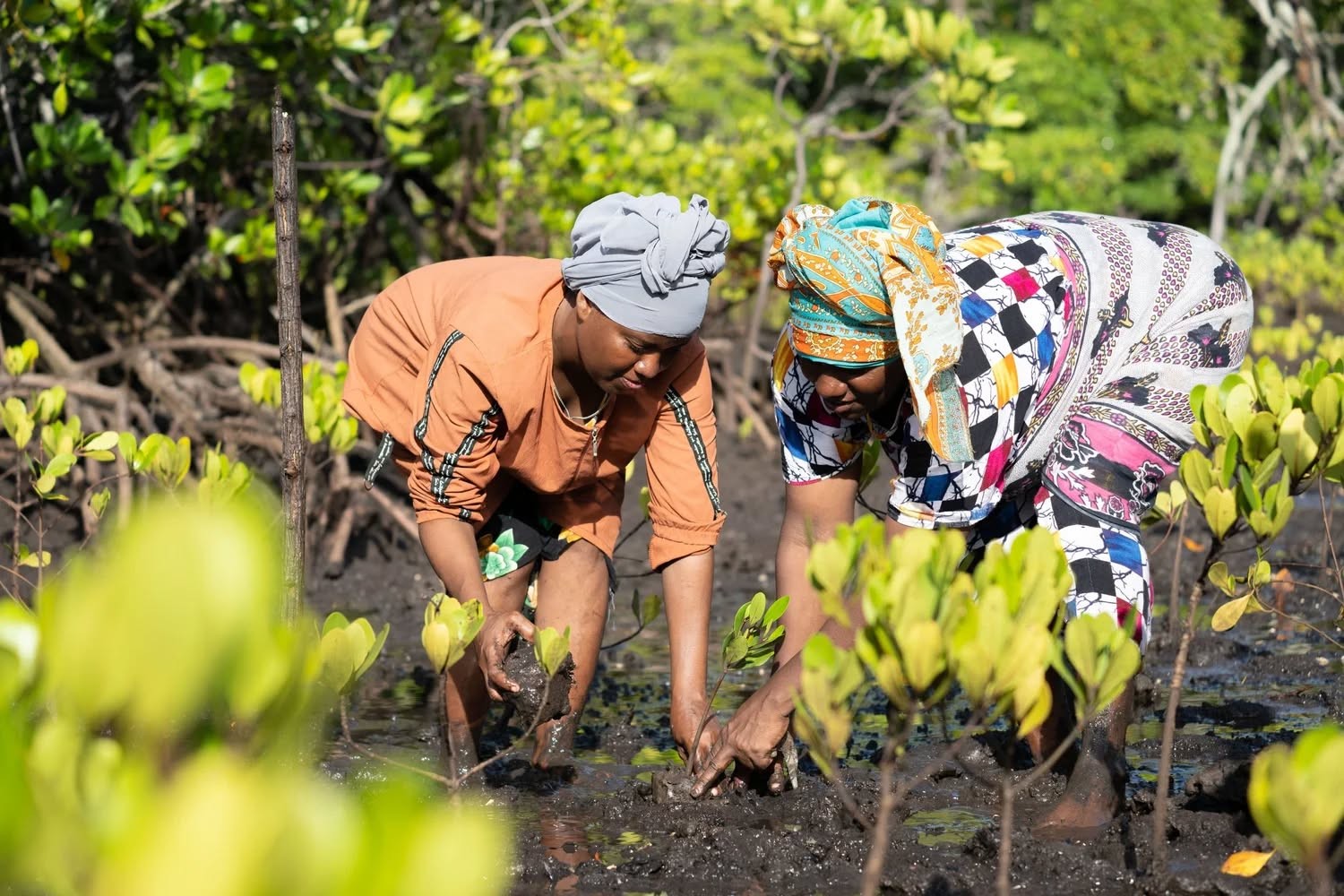
Communities participating in land restoration
Photo credits: Handout
Across northern Kenya, the land is changing.
Where bare soil once dominated, grass is returning. In areas once overgrazed, vegetation is beginning to regenerate. These changes are not accidental—they are the result of coordinated, community-led rangeland management.
Also Read: Kenya's Effort in Protecting the Black Rhino using cutting-edge technology
Also Read:Inside 10 years Kenya's plan in Restoring Mount Elgon
In 2025, over 49,000 herders participated in structured grazing systems, supported by 324 rangeland meetings and multiple training initiatives.
These systems are grounded in both tradition and adaptation.
Communities are planning grazing patterns, setting aside areas for recovery, and managing livestock movement collectively. This reduces pressure on land and allows ecosystems to regenerate.
Physical interventions have also played a role.
More than 56,000 semi-circular bunds have been constructed, supporting water retention and vegetation growth, while over 3,700 hectares of land have been rehabilitated.
For Carlos Lololura, Rangelands Officer at NRT:
“The land responds when it is managed well. What we are seeing now is communities understanding how to work with it, not against it.”
This shift is significant.
Rangelands are the backbone of pastoral livelihoods. When they degrade, entire systems are affected. When they recover, resilience improves.
And importantly—the land remains community-owned.
NRT does not own these landscapes. It supports systems that enable communities to manage them more effectively.
That distinction defines the model.
Because restoration that is owned locally is more likely to last.