
Echo Network Declares GBV a National Crisis, Demands Education Accountability and Peace
Posted by EDITORIAL
Kenyan women led by Echo Network Africa Foundation call for GBV to be declared a national crisis, demand accountability in education bursaries, and urge presidential leadership to restore peace and safety across Kenya.
Nairobi Kenya
In Summary
Kenyan women, under the leadership of Echo Network Africa Foundation, AWLN-Kenya, and the Democracy Trust Fund, have issued a unified call for urgent national reforms. They demand the consolidation of all education bursaries into a single accountable framework, the declaration of Gender-Based Violence (GBV) as a national crisis with full state funding, and decisive leadership from the President to restore peace, uphold human dignity, and end all forms of violence—including state excesses witnessed in places of worship.
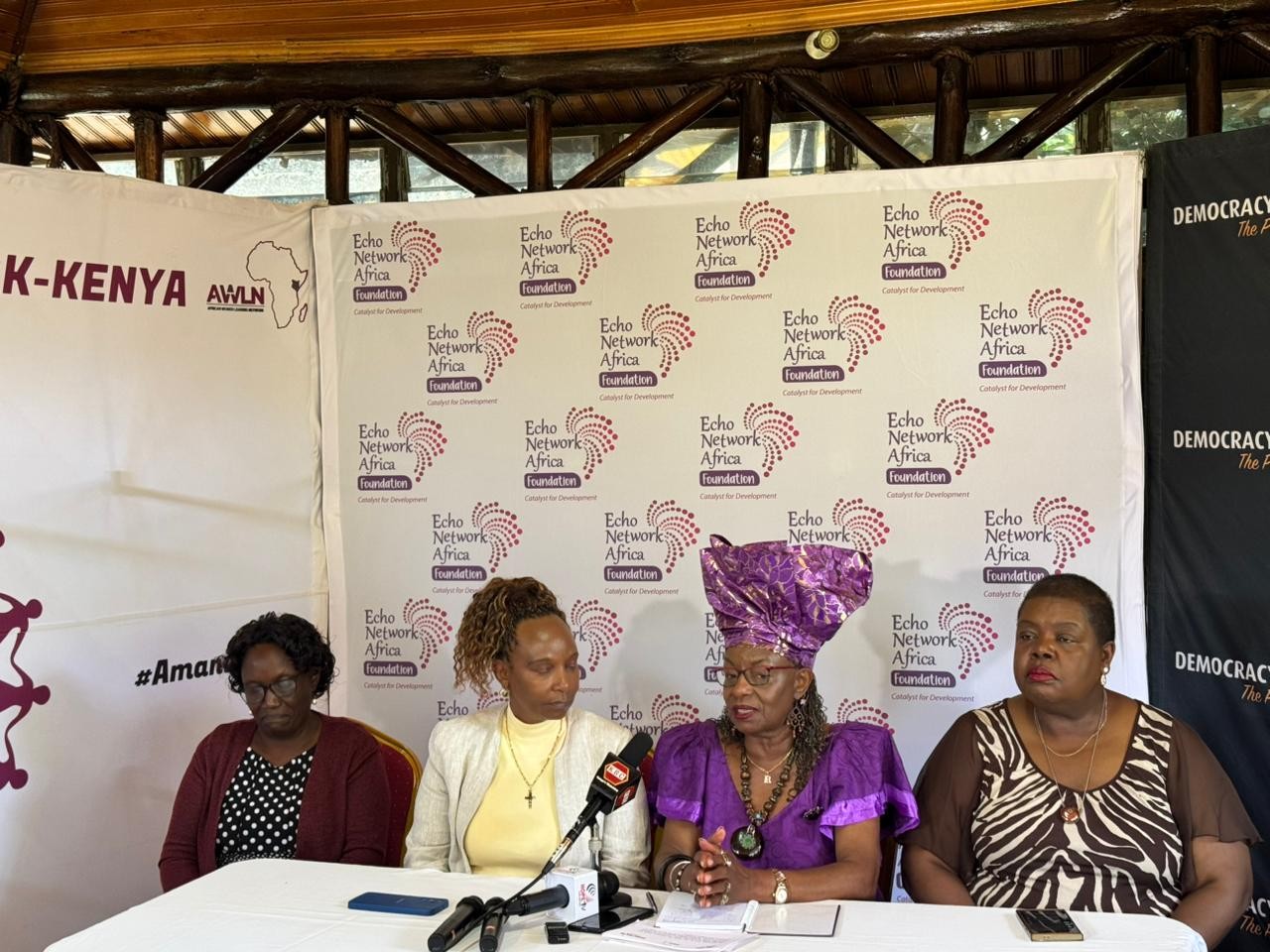
Kenyan women have taken a firm and unified stand on the country’s most pressing social and governance challenges, calling for accountability, safety, and decisive leadership in a powerful national statement issued in Nairobi. Speaking under the auspices of the Echo Network Africa Foundation (ENAF), the African Women Leadership Network (AWLN-Kenya), and the Democracy Trust Fund (DTF), the women reaffirmed that a safe, educated, and peaceful Kenya is not negotiable—and that the time for half-measures has passed.
At the heart of their agenda is education. The women demanded that all education bursaries be consolidated into a single national basket to enhance transparency, accountability, and equity. They argued that the current fragmented bursary system fuels inefficiencies and exclusion, leaving many children—especially from poor and marginalized backgrounds—locked out of education despite constitutional guarantees. Education, they stressed, must never become a privilege for the few or an experiment at the expense of children’s futures.
The statement further expressed deep concern over the ongoing challenges facing the Competency-Based Education framework, including chaotic transitions, high costs, and inadequate infrastructure. The women emphasized that unless financial support mechanisms are streamlined and properly monitored, the education crisis will continue to widen social inequalities and undermine Kenya’s long-term development.
Equally central to the statement was the issue of Gender-Based Violence. The women welcomed the findings and recommendations of the Presidential Technical Working Group on GBV and Femicide, chaired by Dr. Nancy Baraza, and unequivocally supported the call to declare GBV a national crisis. They emphasized that such a declaration must be accompanied by dedicated funding, institutional accountability, and swift implementation—not symbolic gestures.
The women insisted that the Government must spearhead the implementation of the Nancy Baraza Report, with the President leading from the front. They condemned all forms of sexual harassment and violence against women and girls, including technology-facilitated abuse, noting that insecurity in private and public spaces continues to deny women their full rights and dignity. A nation cannot claim progress, they argued, while half its population lives in fear.
Peace and security featured prominently in the statement, with strong condemnation of recent violent incidents and police conduct, particularly the use of force in a church. The women reminded the country that places of worship are sacred safe spaces and that any form of violence within them represents a dangerous erosion of social order and moral responsibility. They warned that Kenya must never slide back into cycles of violence reminiscent of past national trauma.
Ultimately, the women of Kenya made it clear that peace, accountability, and justice are inseparable. They rejected scapegoating and called for dialogue, restraint, and respect across all levels of leadership. While affirming their commitment to national cohesion and reform, they placed the greatest responsibility squarely on the State—and especially the President—to act decisively.
Their message was unambiguous: a peaceful Kenya is good for all, accountability is non-negotiable, and the safety of women and children must define the nation’s priorities going forward.