
GM Maize Standoff: How Policy Delays Are Driving Kenya’s Food Crisis
Posted by JIM MWANDA
Delays in adopting GM maize in Kenya are raising production costs and shaping the future of food security for smallholder farmers.
In Summary
- Maize feeds over 300 million Africans, yet climate shocks and pests continue to suppress yields and threaten food security.
- Genetically Modified (GM) maize has proven effective in boosting yields and reducing pesticide use in countries like South Africa and Sudan.
- In Kenya, delayed adoption is increasing production costs, pushing farmers toward alternatives and deepening food insecurity risks.
Also Read: How GMOs and Biotechnology are shaping the Food Future
Also Read: Kenya's GMOs Potatoes journey
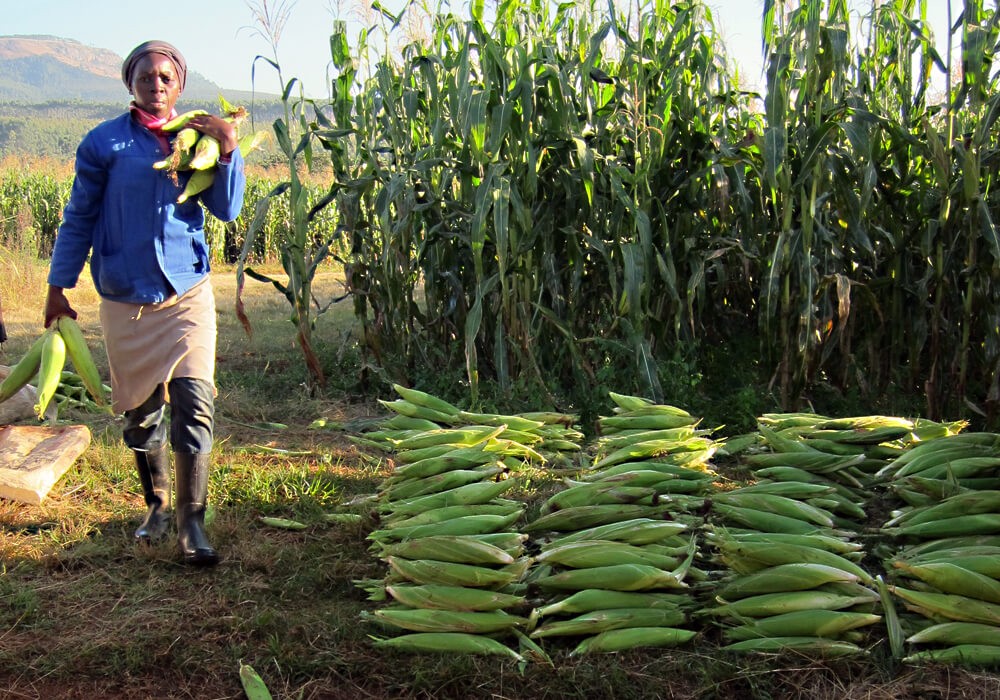
Maize remains the backbone of food security in Kenya and across Africa, with more than 300 million people on the continent depending on it as a primary staple. In Kenya alone, maize accounts for over 65% of daily caloric intake for many households and is cultivated on approximately 2.1 million hectares annually. Despite its central role, maize production continues to face systemic threats from erratic rainfall, climate change, and pest invasions such as Fall Armyworm, leading to yield gaps that average between 1.6 to 2.0 tonnes per hectare—well below the global average of over 5 tonnes. This persistent shortfall underscores an urgent need for resilient agricultural innovations capable of stabilizing yields and reducing vulnerability among smallholder farmers.
The development of Genetically Modified (GM) maize, particularly drought-tolerant and insect-resistant varieties, represents one of the most significant scientific responses to these challenges. Emerging from earlier initiatives such as the Water Efficient Maize for Africa (WEMA) project, the TELA Maize Project has advanced the integration of biotechnology into African agriculture by combining conventional breeding with transgenic solutions. These varieties are engineered to withstand moderate drought conditions while simultaneously protecting against destructive pests. Central to this innovation is the use of Bt (Bacillus thuringiensis), a naturally occurring soil bacterium whose proteins are toxic to specific insect pests but safe for humans, livestock, and beneficial organisms. By embedding this protection within the plant itself, Bt maize reduces reliance on chemical pesticides, lowers environmental impact, and enhances overall plant health by ensuring efficient use of water and nutrients.
The dual threat of drought and pests; particularly stem borers and the invasive Fall Armyworm(FAW) has historically resulted in devastating crop losses. Field trials under the TELA program have demonstrated that Bt maize can deliver yield gains of between 50% and 115% under pest pressure, while also offering partial but meaningful resistance to Fall Armyworm. The next generation of Bt technologies promises even stronger protection. This scientific progress is not theoretical; it has translated into tangible results in countries that embraced the technology early.
Also Read: Africa’s Food Future through innovation
South Africa, which first introduced GM maize in 1996, stands as a leading example. Today, the country cultivates millions of hectares of Bt maize, significantly boosting productivity and farmer incomes. As Dr. Hennie Groenewald of Biosafety South Africa noted, the country’s decision to prioritize science-driven solutions was transformative:
“We realized what science and biotech could do for us and threw all our chips in. With this technology we would be able to more than multiply our farm produce.”
Sudan has also adopted GM crops, reinforcing the growing continental shift toward biotechnology as a tool for agricultural resilience.

Farmers Undergoing a Sensitization forum in Kitale
The discussions convened in Kitale brought together farmers, scientists, and stakeholders, with a strong emphasis on practical solutions for improving agricultural productivity. The organizers emphasized that the briefing was centered on agricultural innovation and farmer needs, particularly the role of improved seed technologies in addressing persistent challenges.
The real impact of pest infestations is best understood through the voices of farmers on the ground. Pauline Chege, a smallholder farmer, noted that rural farmers are in urgent need of seed varieties that directly benefit them and can withstand harsh conditions. He emphasized that many farmers have suffered significant losses due to destructive pests, reflecting the growing pressure faced at the grassroots level.
From a scientific perspective, Dr. James Karanja, Center Director at KALRO Njoro, underscored the progress made in developing solutions tailored to these challenges. He explained that research efforts are focused on producing maize varieties that can withstand drought, diseases, and insect infestations. He noted that the effectiveness of Bt technology is already evident in field conditions, where pests feeding on treated maize plants do not survive. Importantly, he revealed that Kenya has already developed three Bt maize varieties that are ready for market deployment, pending regulatory processes.
In the absence of insect-resistant varieties, many farmers continue to rely heavily on chemical pesticides, increasing production costs by an estimated KSh 10,000 to 15,000 per acre. This rising cost burden is not only eroding profitability but also influencing farming decisions, with some farmers shifting to alternative crops such as sugarcane in search of more stable returns.
The prolonged delays highlight a broader disconnect between scientific advancement and policy implementation. While biosafety and regulatory oversight remain critical, the pace of decision-making has significant implications for food security and farmer livelihoods. Without timely access to improved seed technologies, the gains achieved through years of research risk remaining unrealized
This pattern is not unique to maize. Similar challenges have been observed in other value chains, including potatoes read more, where delayed adoption of improved seed varieties continues to constrain productivity and market competitiveness. In contrast, countries like Nigeria have moved forward with the commercialization of GM crops such as Bt cowpea, demonstrating how regulatory clarity can unlock innovation while maintaining safety standards.
A Policy Decision That Will Shape Kenya’s Food Future
Kenya now stands at a defining moment. The science behind GM maize is well established, the economic benefits are increasingly evident, and the regional momentum toward adoption is growing. Yet, without decisive action to align policy with innovation, the country risks deepening its food security challenges. For millions of farmers who depend on maize not just as a crop but as a livelihood, the urgency is clear: bridging the gap between research and access is no longer optional—it is essential for securing the future of Kenya’s agricultural economy.Farmers, as primary stakeholders, must play a more active role in shaping this discourse. Organized advocacy, evidence-based engagement, and participation in policy dialogues are essential to ensure that their voices influence the outcome. Without this, decisions may continue to be driven by external narratives rather than on-the-ground realities.
READ MORE AGRICULTURAL STORIES HERE