
Kenya’s Nuclear Journey and Steps Toward a Safe, Sustainable Energy Future
Posted by JIM MWANDA
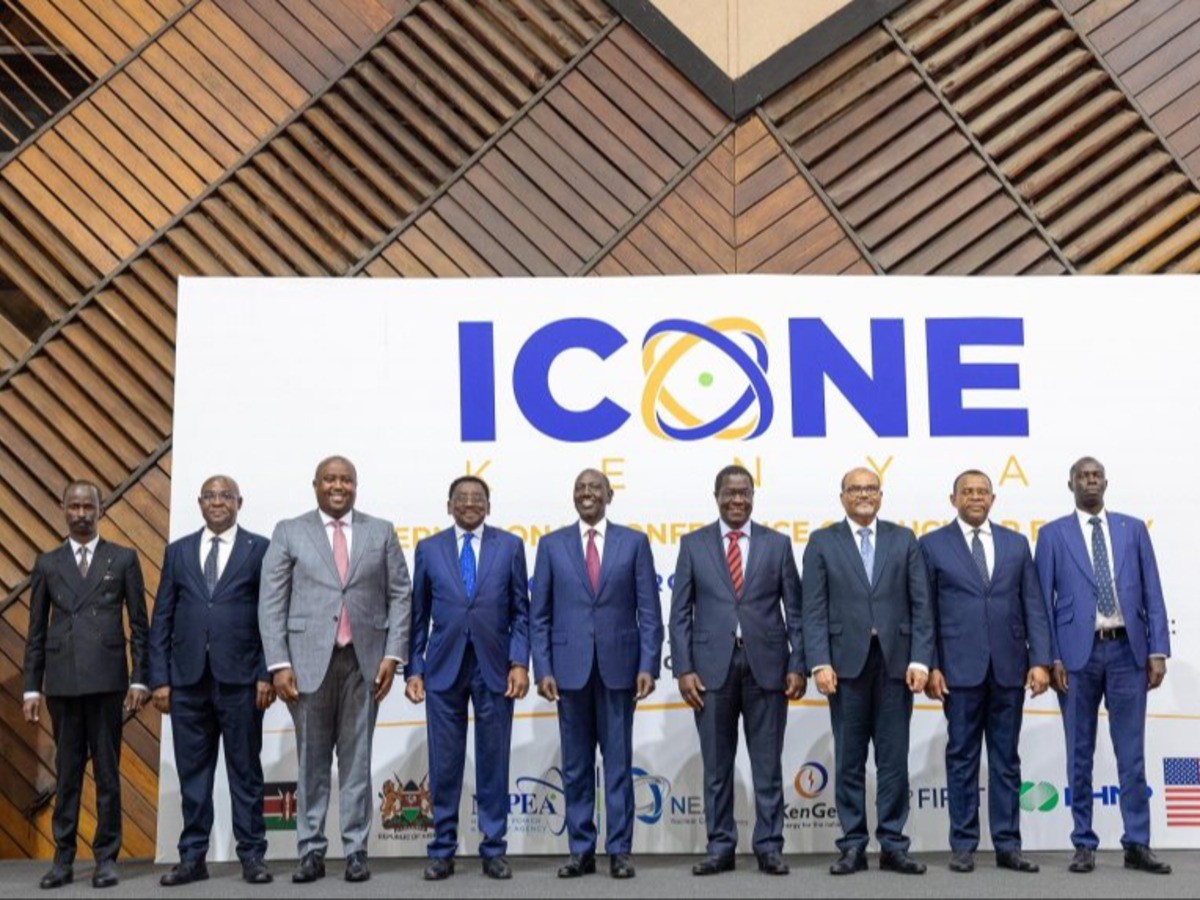
Kenya’s nuclear journey accelerates at ICoNE 2026 in Nairobi, highlighting SMR plans, energy security goals, and the critical role of safety, regulation, and global best practices in nuclear power development.
Key Highlights
- Nairobi hosts ICoNE 2026, positioning Kenya at the center of Africa’s nuclear energy ambitions and partnerships.
- Government signals major investment, including plans for SMRs and a 2,000MW nuclear plant.
- Safety, regulation, and public trust emerge as decisive factors for long-term success.
Kenya’s nuclear journey has entered a defining phase, with Nairobi this week hosting the International Conference on Nuclear Energy (ICoNE 2026), a high-level gathering that has drawn global partners, African governments, and industry stakeholders into a shared conversation about the continent’s energy future. The event reflects both urgency and ambition, as countries across Africa confront rising energy demand and the limitations of existing power systems.
The conference opened against a backdrop of growing international cooperation. The United States, working alongside Kenya and multilateral institutions, reaffirmed its support for the responsible expansion of civil nuclear energy. Through the FIRST program, American officials emphasized a long-term commitment to ensuring that emerging nuclear programs meet the highest standards of safety, security, and nonproliferation. Speaking during the engagements, U.S. representatives underscored that partnerships formed at ICoNE are intended not only to accelerate deployment of advanced technologies such as Small Modular Reactors, but also to strengthen regulatory systems and institutional capacity.
Kenya used the platform to articulate its own ambitions with unusual clarity. President William Ruto signaled that the country is preparing to begin construction of a 2,000MW nuclear power facility in Siaya County, with commissioning projected for 2034. He framed nuclear energy as central to Kenya’s long-term development strategy, noting that it offers both stability and affordability. In his remarks, he described nuclear power as “a cornerstone of inter-generational sustainable development,” adding that the transition could significantly lower electricity costs while supporting economic transformation. The project is also expected to generate thousands of jobs during its peak construction phase, spanning both technical and non-technical roles.
Yet even as the conference highlighted opportunity, it also brought into sharper focus the weight of responsibility that accompanies nuclear energy. Across panel discussions and bilateral meetings, a consistent theme emerged: success in nuclear development is determined less by infrastructure alone and more by the strength of institutions that govern it. Kenya’s regulators have been particularly vocal on this point, stressing that the country is at a critical stage where it can define its nuclear culture before large-scale deployment begins.
Regulatory leadership emphasized that safety must be treated not as a procedural requirement but as a deeply embedded value. The experience of countries with long-standing nuclear programs shows that culture within institutions can shape outcomes as much as technology itself. In this context, transparency and communication were repeatedly highlighted as essential tools for building public confidence. Officials argued that openness about safety processes reassures citizens, countering the misconception that discussing risks creates fear. Instead, it signals preparedness and accountability, much like safety briefings in aviation.
Kenya’s position as a newcomer to nuclear energy presents a unique advantage. Unlike older programs that have had to reform entrenched practices, Kenya has the opportunity to establish strong norms from the outset. This includes cultivating an environment where engineers and operators are encouraged to raise concerns early, where oversight bodies maintain independence, and where continuous improvement is prioritized over reactive crisis management. The balance between regulator and operator was also identified as crucial, requiring both collaboration and sufficient distance to prevent conflicts of interest.
The question that now arises is whether Kenya, and indeed other African countries, possess the capacity to manage such a complex undertaking. International experience suggests that successful nuclear programs are built on a combination of technical expertise, regulatory independence, and long-term policy consistency. Countries like France and South Korea have demonstrated how disciplined planning and strong institutions can deliver reliable nuclear power at scale. France, through standardized reactor designs and centralized oversight, has maintained one of the world’s most extensive nuclear fleets, while South Korea has combined state coordination with industrial capability to become a leading exporter of nuclear technology.
By contrast, the failures that have shaped global perceptions of nuclear energy offer equally important lessons. The accidents at Three Mile Island, Chernobyl, and Fukushima were not solely the result of technical malfunctions but were compounded by human and institutional shortcomings. Chernobyl exposed the dangers of secrecy and rigid hierarchies that discouraged questioning authority, while Fukushima underscored the consequences of insufficient preparation for extreme scenarios. These events continue to inform global standards, reinforcing the need for transparency, redundancy, and rigorous risk assessment.
Beyond construction and operation, nuclear energy introduces challenges that extend across its entire lifecycle. Managing radioactive materials requires precise handling and robust containment systems, while long-term storage of nuclear waste remains one of the most complex issues facing the industry. Advanced nuclear nations have invested heavily in solutions such as deep geological repositories, designed to isolate waste safely for thousands of years. For countries like Kenya, developing or accessing such capabilities will be essential to ensuring environmental and public safety.
At the same time, nuclear energy offers significant environmental advantages. It produces large amounts of electricity with minimal greenhouse gas emissions, making it a powerful tool in efforts to combat climate change. As Kenya seeks to expand its energy capacity while reducing reliance on fossil fuels, nuclear power presents a pathway to achieving both reliability and sustainability. However, these benefits must be weighed against the potential risks, particularly in the event of accidents or inadequate waste management.
What emerged most clearly from ICoNE 2026 is that nuclear energy is not simply an engineering project but a governance challenge. It demands institutions that can operate effectively over decades, leadership that prioritizes long-term outcomes over short-term gains, and a public engagement strategy that builds trust rather than erodes it. The discussions in Nairobi have signaled that Kenya is ready to take this step, but readiness must now be matched by sustained commitment.
As the conference continues, Kenya stands at a crossroads that will shape its energy future for generations. The decisions made today will determine whether nuclear power becomes a foundation for economic growth and energy security or a source of unforeseen risk. In this moment, Kenya’s nuclear journey is defined not only by its ambitions, but by the steps it is willing to take to ensure those ambitions are realized safely and responsibly.