
Protecting Kenya’s Black Rhinos with Cutting-Edge Technology 🛡️
Posted by JIM MWANDA
In a groundbreaking partnership, WWF-Kenya, Ol Pejeta Conservancy, Kenya Wildlife Service, FLIR, and WWF-US have deployed advanced thermal surveillance cameras across 10 key rhino strongholds.
Nairobi Kenya
In Summary
- Kenya’s black rhino population, now just over 1,000 after decades of decline, faces ongoing threats from poaching and habitat loss—but the integration of thermal surveillance technology in 10 rhino strongholds offers a powerful, real-time defense that can reduce poaching incidents by up to 70% and safeguard critical genetic diversity.
- The use of advanced monitoring is more than an anti-poaching measure—it strengthens ecosystems, secures livelihoods tied to wildlife tourism, and positions Kenya to achieve a 5–7% annual growth in black rhino numbers, moving closer to doubling the population within two decades.

KWS Rangers setting up Thermal surveillance cameras
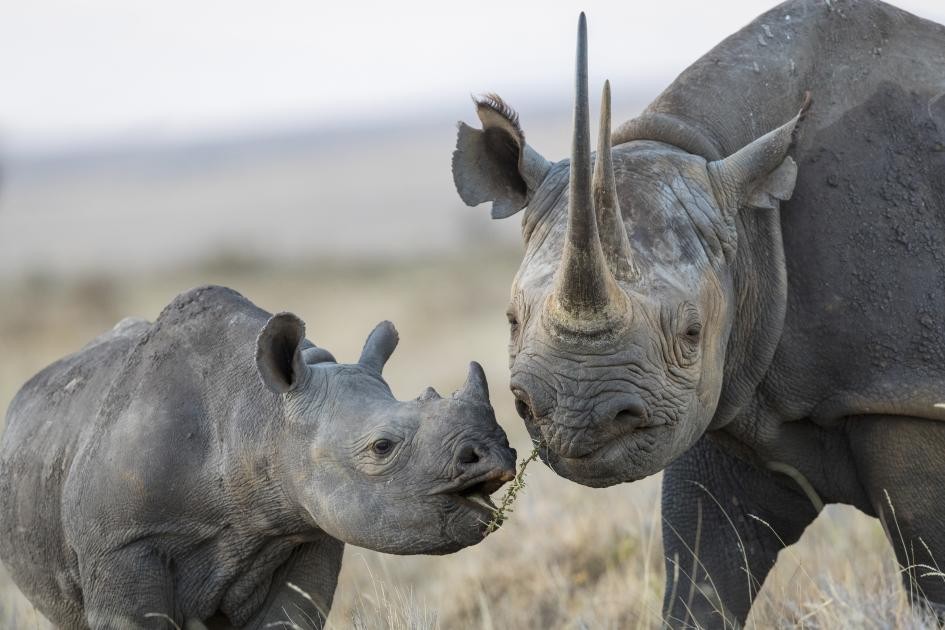
In the heart of Kenya’s savannah, under the blanket of starlit skies, a quiet revolution is underway. The black rhino—an ancient guardian of Africa’s wild landscapes—stands at the crossroads of survival and extinction. Despite encouraging signs of recovery, with Kenya’s black rhino population rising to over 1,000 individuals after decades of near collapse, the species remains critically endangered.
Its very existence is threatened by relentless poaching, fueled by the illegal international demand for its horn, and the shrinking of its habitat due to human expansion.
ALSO READ: Kenya Expands White Rhino Habitat with Historic Translocation to Loisaba Conservancy
To tip the balance in favor of survival, conservationists are turning to innovation. In a groundbreaking partnership, WWF-Kenya, Ol Pejeta Conservancy, Kenya Wildlife Service, FLIR, and WWF-US have deployed advanced thermal surveillance cameras across 10 key rhino strongholds.
These high-tech eyes pierce the darkness, detecting movement and heat signatures where the human eye cannot. By covering critical entry points and vulnerable habitats, they act as a digital shield—alerting rangers in real time, stopping poachers before they strike, and ensuring every rhino life is given a fighting chance.
The expected impact of this technology is nothing short of transformative. Early field trials in similar landscapes have shown that poaching incidents can drop by up to 70% when thermal cameras are integrated into anti-poaching patrols.

Rangers undergoing training
For Kenya’s rhino sanctuaries, this could mean protecting dozens of animals each year, preventing irreversible genetic loss, and accelerating population recovery. With consistent protection, scientists estimate that the black rhino population in Kenya could grow by 5–7% annually, putting the dream of doubling current numbers within reach over the next two decades.
Beyond the numbers lies a deeper truth. Every rhino saved is more than just a conservation win—it is a victory for ecosystems that depend on them, for the rangers who risk their lives daily, and for communities whose livelihoods are tied to a thriving wildlife economy. Thermal surveillance is not just a tool; it is a promise—that Kenya’s black rhinos will not vanish under the cover of night, but instead walk boldly into a future where technology and tradition unite to protect them.
This story of resilience, innovation, and hope reminds us that the fight for endangered species is also the fight for our shared humanity. The black rhino, with its prehistoric strength and unmatched grace, deserves not just to survive, but to thrive. And thanks to cutting-edge conservation, that future is now within sight.