
Wakati Wetu Festival: Africa’s Cultural Reckoning for Reparative Justice
Posted by JIM MWANDA
Wakati Wetu Festival in Nairobi brought together artists, activists, and scholars from across Africa to spark a continental dialogue on reparative justice through art, culture, and collective memory.
Nairobi Kenya
In Summary:
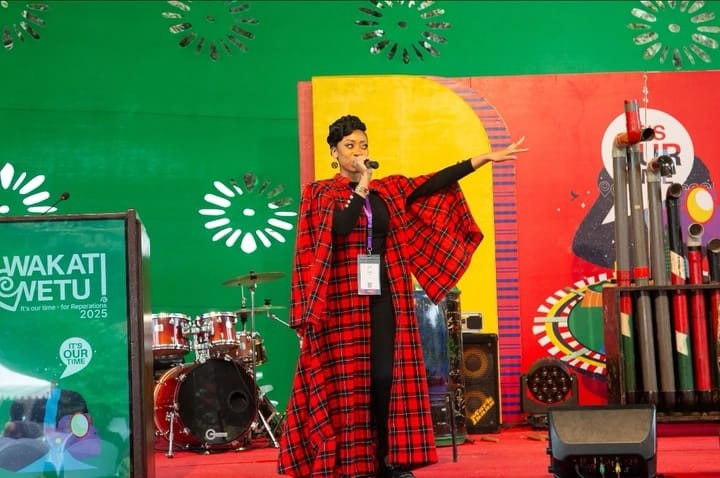
The tranquil gardens of Entim Sidai Wellness Sanctuary came alive with rhythm, reflection, and resistance as the Wakati Wetu: It’s Our Time Festival unfolded; a first-of-its-kind gathering anchoring Africa’s rising call for reparative justice through the lens of art and cultural renewal.
Organized by African Futures Lab, in partnership with Baraza Media Lab, AU ECOSOCC, and Reform Initiatives, the two-day festival fused performance, philosophy, and policy dialogue into one powerful collective vision: to resist, repair, and reclaim. It marked the beginning of a 10-year journey aligned with the African Union’s Decade of Reparations (2026–2036) — a bold step toward reframing justice not as an external demand but as an act of self-definition.
“Art plays a crucial role in shaping and renewing culture,” said African Futures Lab Executive Director Liliane Umubyeyi during her opening remarks. “Justice is both a political and a cultural question. Our shared creation has the power to renew our understanding of history. The time is truly ours.”
A Festival of Truth and Healing
The festival opened with a stirring keynote by Yvonne Adhiambo Owuor, the award-winning Kenyan novelist known for her lyrical storytelling. Her words pierced the air with moral clarity.
“Reparations is first an act of moral autopsy and then moral exorcism,” she declared. “There is no repair or healing without walking into, around, and naming the wound in its fullness.”
Owuor challenged the audience to resist reducing reparations to technocratic development language. Her provocation
“Why would we want to integrate reparations into development, fold justice back into the very economic model that produced injustice?” — set the reflective tone for the two days that followed.
READ: flydubai Expands Kenyan Footprint with Launch of Nairobi Flights
READ: From Vision to Vogue: Ikpen’s Timeless Elegance
Memory as the Foundation of Rebirth
Panels and plenaries blended philosophy with politics. In a moving address, Paul Muite, veteran lawyer and former MP, revisited his experience in the Mau Mau reparations case against the British government.
“In order for reparations cases to succeed, the starting point is truthful research, accurate records, names, and stories,” Muite said. “Justice begins with documentation.”
Media scholar Christine Mungai and journalist Ngartia Mūrūthi dissected how colonial media shaped false narratives that justified oppression.
“For the colonial project to succeed, it had to manufacture consent,” Ngartia said. “Newspapers were propaganda machines. They advertised Kenya as a white man’s country.”
Mungai added, “It takes courage for journalists to tell stories that make power uncomfortable. That courage is part of repair.”
Art as Resistance
Under the creative theme “Confronting the Silence,” the festival’s artistic showcase became a visual and sonic protest. Eric Wainaina, DJ Talie, and Koko Koseso turned the evening into a meditative concert of healing and defiance.
Walls around the sanctuary were transformed into “living archives” — murals, poems, and installations that told stories of loss, survival, and reclamation. Film screenings such as If Objects Could Speak and How to Build a Library examined the cultural erasures left by colonial plunder.
“You cannot talk about renaissance if you do not know your history,” reminded philosopher Yoporeka Somet. “If we want to talk about reparations, we must first heal ourselves by reconnecting with what we were before our story was disrupted.”
Reclaiming the Future
Throughout the festival, discussions on tax justice, gendered reparations, and climate reparations stretched the meaning of justice beyond compensation — into systemic transformation.
Dr. Natasha Shivji urged African governments to claim the narrative from within.
“The language of reparations is not simply a demand on the outside world; it is a demand on the state — to organize its people and its history into a revolutionary platform.”
As the sun set on the closing day, poets Sitawa Namwalie and June Gachui led the grand finale concert — a stirring fusion of spoken word, song, and ritual. Their performance felt less like entertainment and more like invocation — a call to remember, to rebuild, and to belong again.
READ: Kenya Breweries Limited Kicks Off Nationwide Tusker Oktobafest With a Fresh “Kulture” Twist
The festival closed with a keynote by Brian Kagoro, whose address, “Vision for the Future,” called on Africa to anchor justice within its own institutions and imaginations.
“Reparations is not charity. It’s memory meeting courage — and courage meeting action,” he said.